Every dental clinic has that one person who is a game-changer. He/She picks things up very quickly, helps others when they are stuck, and somehow has a solution to every problem. Imagine having a few of those people supporting your software rollout, and magically, the whole process feels less stressful and a lot more manageable.
Today, we will explore who internal champions are, why they play a crucial role in the migration to new dental software, and how dentists can build them step by step. We will also explore how internal champions support the implementation stages.
Who are Internal Champions, and why are they important
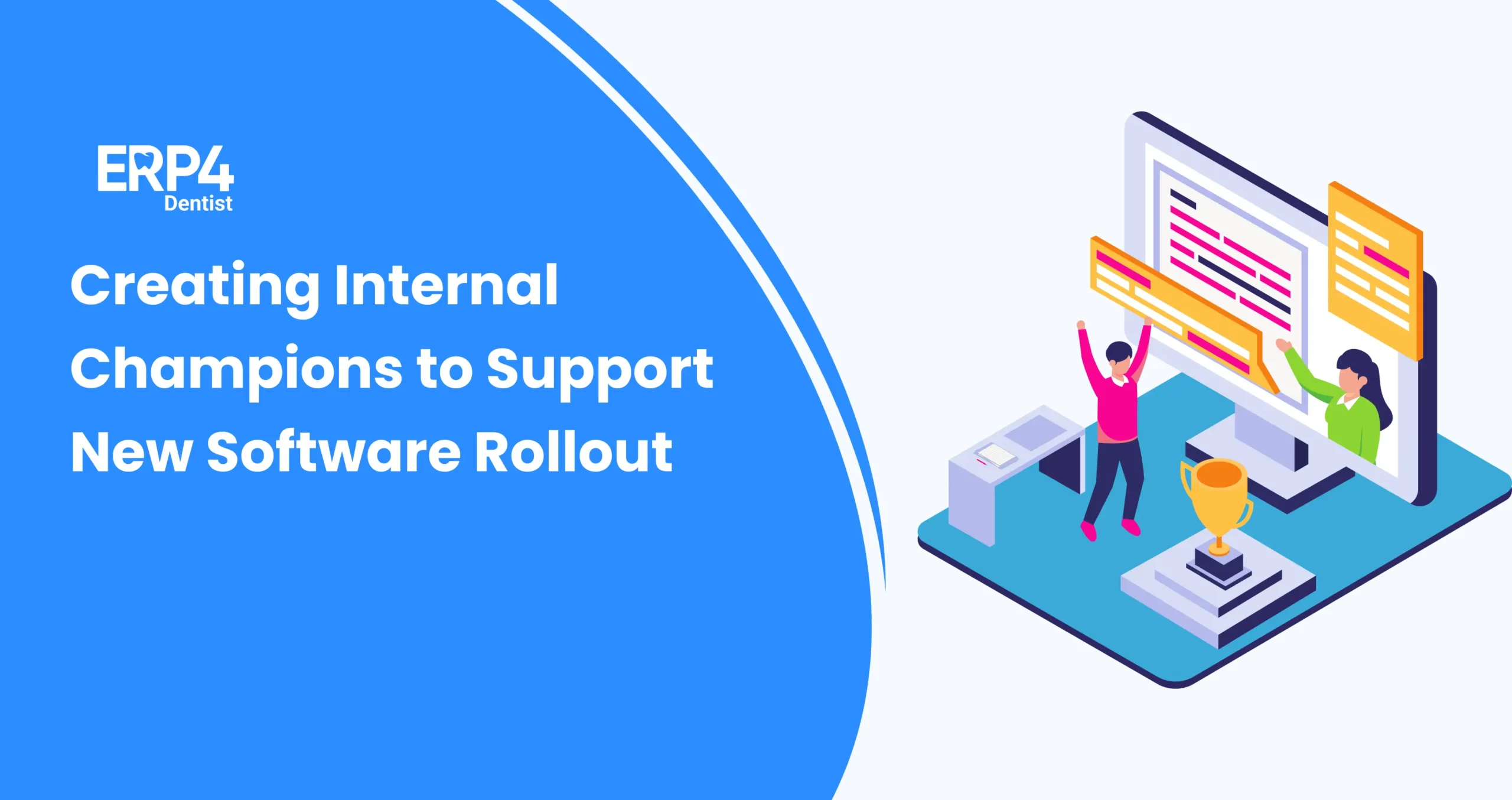
Internal champions are change agents within a Dental Clinic who take charge of the new software and genuinely help others adapt to change seamlessly. They act as a bridge between the dental software provider and the clinic staff.
Why Internal Champions Matter:
- Quicker adoption: Staff feel very comfortable learning from somebody with whom they are familiar
- Lack of Resistance: Change is smooth when guided by a friend who is a peer
- Faster Issue Resolution: Small issues get addressed internally without any delays
- Staff accountability: Implementation champions ensure every process is followed correctly
Dental clinics thereby create a self-sustaining system in which knowledge flows smoothly within the team.
Steps to Build Internal Champions for Software Adoption
Creating internal champions within a dental team does not happen automatically. A structured approach makes all the difference.
1. Identify the Right Champions
Look out for team members who are
- Technology-friendly
- Good communicators
- Problem solvers
These people don’t need to be experts; they just have to be proactive individuals willing to learn and help others.
2. Involve Team Early
Bringing the entire dental team inside the software onboarding process in the initial stages matters the most. Early exposure to the changes helps them understand workflows better and builds confidence.
3. Provide Appropriate Training
Internal champions should receive slightly more advanced training than other team members. This helps them
- Handle troubleshooting with ease
- Guide dental staff during daily tasks
- Readily answer common concerns
4. Define Responsibilities Clearly
Make the Internal Champion’s role very clear
- Supporting dental team members in every phase
- Ensuring complete software usage
- Acting as an internal first point of contact
5. Drive Ownership within Internal Champions
When Internal Champions feel responsible for a successful software rollout, they act as a catalyst and help drive adoption seamlessly.
How Internal Champions Help During Different Stages of Software Implementation
| Implementation stages | Role of Internal Champions | Impact on Dental Clinic |
| Before implementation | Understand workflows clearly and align team expectations | Seamless integration with minimal errors |
| During implementation | Continuously train dental staff, clarify doubts regularly, and ensure proper usage | Faster adoption and less confusion |
| Post Go-live/After implementation | Continuously monitor usage, solve minor roadblocks, and support continuous improvement | Long-term confidence-building among staff and clinic efficiency |
Common Challenges When Building Internal Champions
Clinics often face various challenges when building successful Internal Champions.
1. Lack of Time
Dental clinic staff are overwhelmed with so many responsibilities on a daily basis. Taking on an additional role can feel difficult to handle.
2. Resistance to Change
Stepping into a leadership or support role is not a piece of cake for everybody. People do hesitate initially.
3. Lack of Recognition
The motivation of Internal Champions can decline over time without recognition.
Addressing these challenges early on helps build a strong and reliable support system within the clinic.
4. Insufficient Knowledge
Lack of proper training may undermine Internal Champions’ confidence in guiding other team members.
5. Single Person Dependency
Dependency on a single Internal Champion can create bottlenecks if they are unavailable or on leave.
How ERP4Dentist Supports Internal Champions
With ERP4Dentist, Internal Champions are not left alone. They are supported at every stage, making them vital contributors to the clinic’s success.
Here’s how:
- A very structured onboarding process helps Internal Champions understand workflows clearly.
- A user-friendly interface supports easy navigation, making it simpler for champions to train other team members.
- ERP4Dentist works hand in hand with Champions. While they resolve internal queries, ERP4Dentist provides external support as needed.
- Continuous regular updates on software upgrades ensure champions stay informed and drive software adoption effectively.
Conclusion
Today, a successful dental software implementation is not just about technology; it is about real people using it. Internal Champions are Change Management Agents, who play a key role in ensuring the transition is smooth and sustainable.
ERP4Dentist, Dental Practice Management Software, supports dental clinics in building strong internal champions who drive operational excellence by working with the clinic.
Explore more by trying their 30-Day Free Trial today!
FAQ’s
- Who can become an internal champion in a clinic?
Any clinic team member who is proactive, willing to learn, and comfortable leading/guiding others can become an internal champion.
- How many internal champions should a clinic have?
Ideally, clinics should have 2–3 champions to ensure continuity and avoid dependence on a single person.
- Do internal champions replace technical support teams?
No, they support external support by handling basic issues internally and reducing dependency.
- How can clinics motivate internal champions?
Recognition, appreciation, and involving them in decision-making help keep them motivated.
- Why are internal champions important for software adoption?
They make the transition smoother by helping staff adapt quickly, reducing resistance, and improving overall efficiency.