The world is changing at a faster pace than ever, and dentistry is not an exception. Digital X-rays, cloud-based patient management, and all other areas of a dental clinic are changing with the digital age. Among the greatest transformations is the replacement of handwritten prescriptions with an e-prescription integrated with dental records. Dentists can now create precise, safe, and findable prescriptions in their practice management software as opposed to using paper slips, which are easily lost or read incorrectly.
This shift toward digital prescription software not only simplifies the operations but also enhances the safety and compliance. The benefits of electronic prescriptions extend far beyond convenience; they reduce errors, save valuable chairside time, and enhance the overall prescription electronics experience for both dentists and patients. The trend in the modern healthcare world is that in the modern world, embracing efficient electronic prescription tools is not an option, but a mandate of the modern dental practice.
What Are E-Prescriptions in Dentistry?
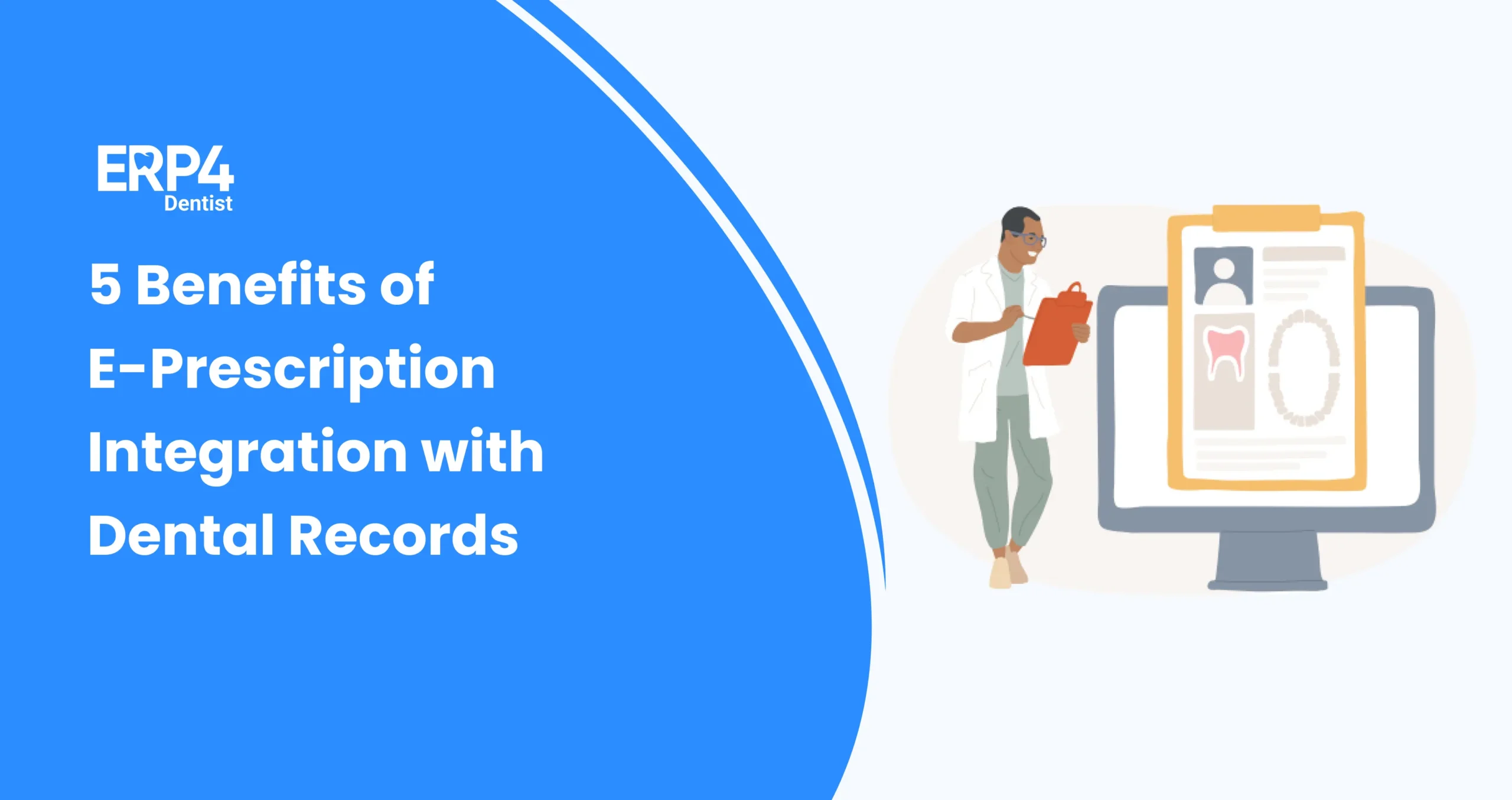
An e-prescription is an electronic copy of a traditional paper prescription that is designed and transferred electronically by means of special software. In the dental field, e-prescriptions enable dentists to prescribe painkillers, antibiotics, or post-treatment medicine directly out of the digital files of the patient. Prescriptions are stored safely and associated with patient history instead of being written on slips, which can be lost or misunderstood.
This has transformed the dental electronic prescriptions to become faster, safer, and more precise. Through electronic prescription software, clinics will be able to dispatch precise medication information to pharmacies, reduce the number of mistakes, and create complete treatment histories in a single location. In the case of dental offices, it implies improved efficiency and better patient care.
How Do Electronic Prescriptions Work?
Electronic prescriptions are a straightforward but efficient procedure that links dentists and patients together. Upon a dentist completing a treatment plan, they request an electronic prescription through the electronic prescription software that would form a digital prescription. This contains information like the drug name, dosage, and time frame, which are all stored in the digital record of the patient.
The prescription can then be shared immediately with the patient when it is generated. This effective e-prescription system eradicates the risk factors of manual prescription such as the chances of illegible handwriting, slippage of papers, or mistakes in doses. To patients, it implies that they will no longer need to keep paper copies, whereas clinics will have a full and traceable example of an electronic prescription, which is stored in the system.
Concisely, this is how dental office electronic prescriptions are made accurate, fast, and accountable in a single seamless workflow.
Why Dental Clinics Should Adopt E-Prescriptions
Dentistry depends a lot on prescriptions in the treatment of pain, antibiotics, and recovery after the procedure. Clinics benefit by becoming more efficient, precise, and patient-trusted by switching from hard copy to electronic prescriptions in the dental office. An effective system will ensure safer prescriptions, decrease the chances of drug interactions or overlapping of drugs.
An e-prescription has not only advantages for the clinic management. Dentists also do not spend time on repetitive paperwork, and all the prescriptions are safely stored in digital records that can be used in the future. This improves compliance as well as improves patient-doctor communication.
In addition to that, patients value the ease of the digital records; they do not have to feel scared to lose a slip or have an important handwritten note with confusion anymore.
5 Key Features of E-Prescription System
Moving to e-prescriptions is not merely a paperless exercise but a change in the way dental clinics are run. An e-prescription integrated with dental records helps clinics simplify operations, increase the accuracy of the prescription, and provide better patient care. The following are five major characteristics of an e-prescription integrated with dental records that every dental office in modern times should be aware of.
1. Seamless Integration with Patient Records
The possibility of connecting to the history of the patient and treatment plans directly is one of the greatest benefits of e-prescription. All prescriptions are kept with clinical notes, X-rays, and other medical information to provide dentists with a complete picture before prescribing medicine. Such a degree of integration minimizes the possibility of drug interaction and makes prescriptions always available in case of reviewing prior treatment. It translates into a safer experience in electronic prescription and greater transparency to the patients, and continuity and efficiency in tracking of care by clinics.
2. Improved Accuracy and Reduced Errors
Handwritten prescriptions may be misinterpreted, wrongly dosed, or even lost. These risks are greatly minimized with an electronic prescription software. All information, including drug name and dosage, frequency, etc., is typed and stored in digital form so that there is no guessing. This degree of accuracy is essential to dental practices, particularly when prescribing antibiotics or pain management drugs. With an effective electronic prescription system, clinics will be able to reduce the errors made, save patients, and ensure that the pharmacies receive the right instructions each time.
3. Time-Saving Workflow
Paper prescription management is known to slow down daily processes, particularly in busy dental clinics where patients are attended to one at a time. Dentists will be able to create prescriptions with only a few clicks with digital prescription software, which will save them precious time at the chairside. As the information is already connected to the record of the patient, there is no necessity to enter the information repeatedly.
This simplified process saves time in consultations, besides cutting down on paperwork in the hands of the staff. A streamlined electronic prescription system means that the prescribed item is immediately available, and dentists have more time with patients and less time with paperwork.
4. Better Patient Experience
Patients value convenience, and electronic prescriptions for dental offices deliver exactly that. Patients do not leave with delicate pieces of paper with instructions, but are provided with clear, digital ones, which can be stored on a computer or sent directly to a pharmacy. This makes them less likely to be confused, they take the correct dosage, and they do not have to waste time on losing a prescription.
In patients receiving treatments where they need several medications, a dental electronic prescription system can store them all in one location. The procedure is contemporary, professional, and trustworthy, creating confidence in the services offered at the clinic.
5. Compliance and Analytics
In addition to convenience, e-prescriptions also add long-term value in terms of compliance and data-driven decision-making. Electronic prescription software creates a secure record that can be accessed immediately during audits or follow-up. This makes sure that standards of healthcare are met and there is transparency in dental clinics. Also, built-in analytics provide dentists with information about prescriptive trends, drug usage, and patient outcomes.
Monitoring this data, the clinics will be able to optimize treatment plans, determine the prevailing needs, and make better decisions. The benefits of electronic prescriptions go far beyond writing a digital slip; they create a foundation for smarter, compliant, and future-ready dental practice management.
Final Word
The field of dentistry is becoming digital, and the adoption of digital tools is no longer a choice but a necessity. With e-prescription and dental records, clinics will be able to optimize their processes, minimize mistakes, and provide patients with a more trustworthy experience. The benefits of e-prescription touch all corners of a dental practice, including saving time and ensuring compliance is achieved.
ERP4Dentist has you covered. It is specifically built to meet the needs of dental clinics and is an integrated system to combine e-prescriptions and full patient management, billing, scheduling, and more within a single easy-to-use platform. No matter whether you have a single practice or a number of chairs, ERP4Dentist will keep your clinic operating more efficiently and keep your patients happier.
And the best part? You can try it risk-free. We offer a 30-day trial period with no costs, so you can try how convenient it is to change your prescription process and manage your clinic in general. Go digital in the dentistry sphere with ERP4Dentist.
Frequently Asked Questions
- What is eScript used for?
Prescriptions are sent electronically through an eScript between a dentist, pharmacy, or patient. It enhances precision, minimizes errors, and makes the process of doing it faster and easier.
- What is EHR in dentistry?
In dentistry, EHR is an Electronic Health Record that is a digital record of the medical and dental history of a patient. It assists the dentists in retrieving all the information and making a better decision on treatment.
- What does EDR stand for in dental?
EDR abbreviates Electronic Dental Record. It is an electronic system that keeps patient dental records, treatment records, X-rays, and prescriptions within a single location.
- What is the use of e-prescription?
The application of e-prescription is to substitute slips made in paper with secure digital prescriptions. It will provide safe medication handling, rapid access, and easy integration with patient records.