In the world of dentistry, manual paperwork is not only time-consuming but also error-prone. Many modern clinics are transitioning to digital systems, and one significant shift is the importance of digital dental consent forms before any treatment.
In this blog, we will understand what digital dental consent forms are and how they play a vital role in today’s dental practice. Consent forms ensure patients are fully informed about the procedure and its associated risks before the treatment begins.
What Are Dental Consent Forms?
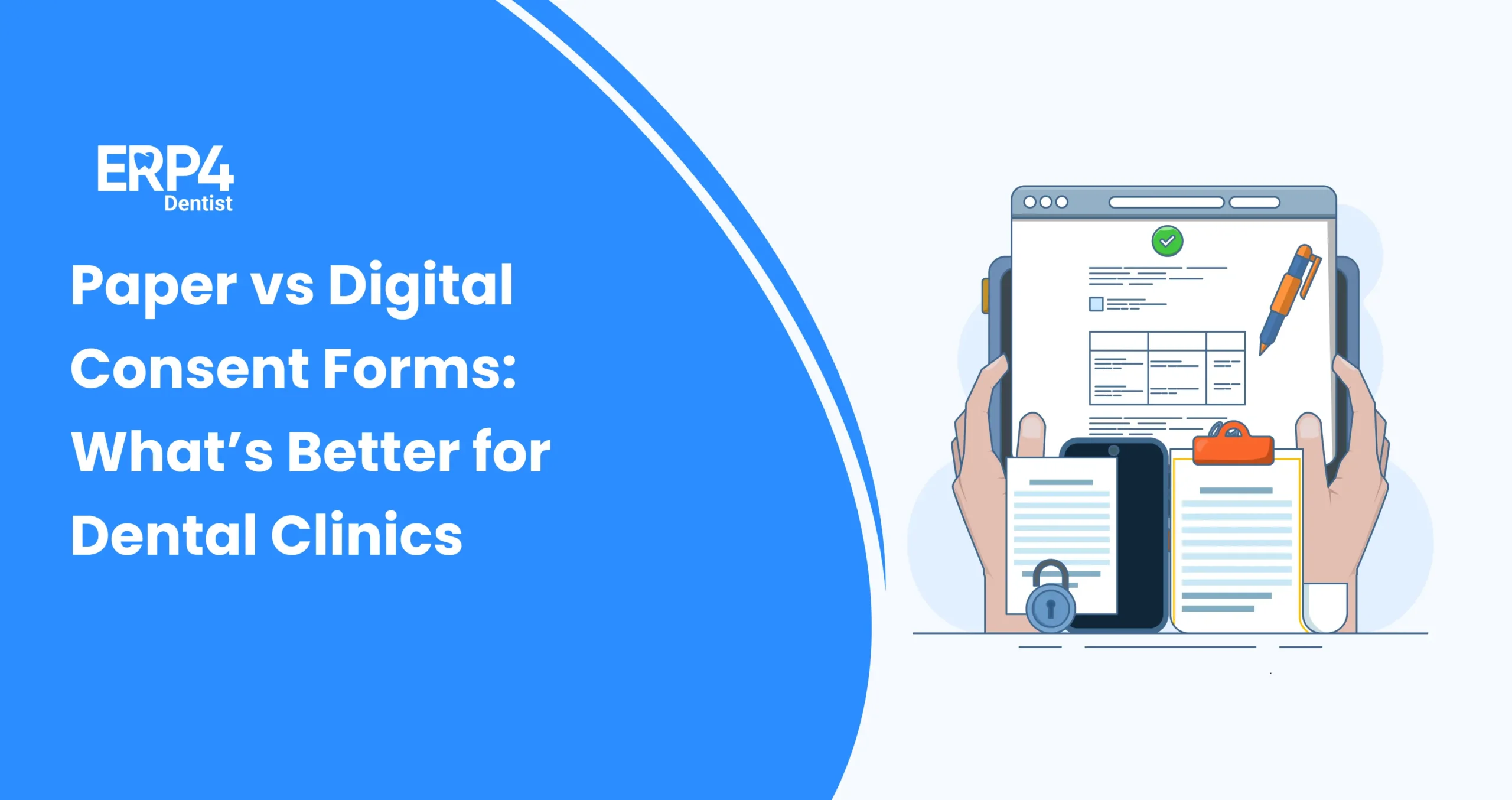
Dental consent forms are digital forms that a patient signs to agree to dental services after they have reviewed and understood all the information.
They typically have:
- Details about the procedure
- Potential risks and complications
- Alternate methods to treat
- Acknowledgement and signature
These forms are not just for appearance in a dental office, but they are an important part of being ethical and following the law. Getting the right consent helps the dentist and patient trust each other more and makes sure there are fewer misunderstandings.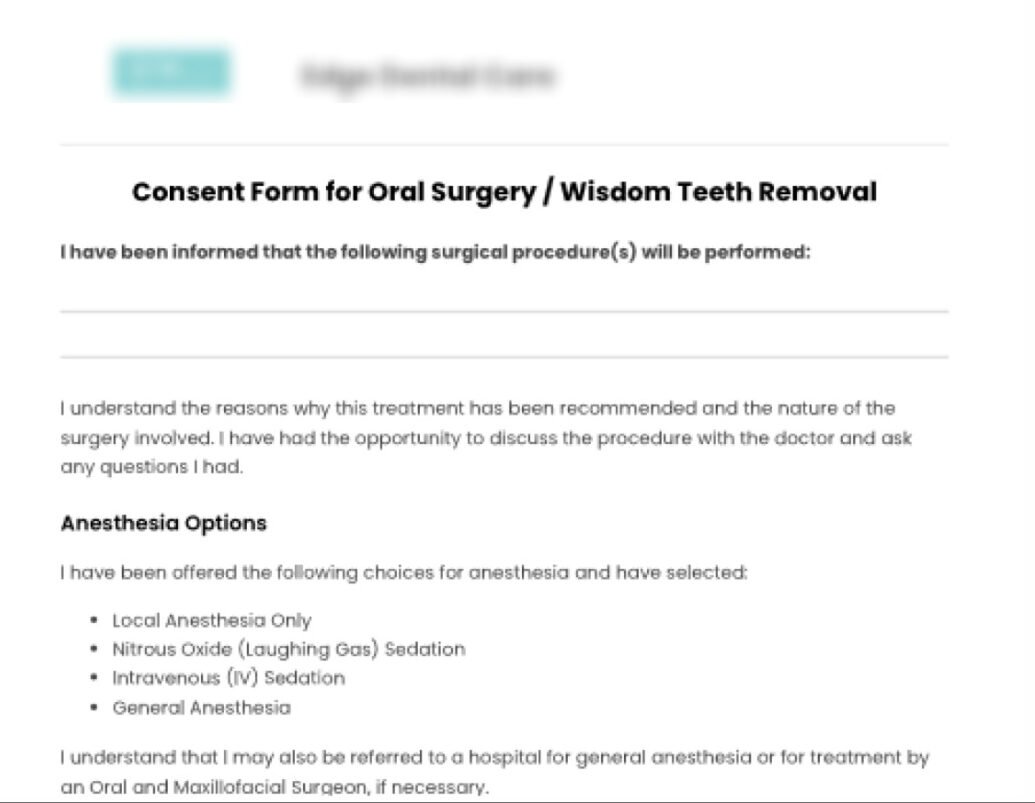
Are Digital Consent Forms Legally Valid in India?
Yes, digital consent is legally valid in India when it follows the proper legal framework.
Under the Information Technology Act, 2000 and the Indian Contract Act, 1872 , electronic records and electronic signatures are legally recognised. This means a properly captured electronic consent form holds the same validity as a paper consent, provided authenticity is maintained.
Key legal points include:
- Electronically signed Consent form holds the same legal value as a handwritten consent form.
- Electronic consent can be used as evidence in court.
- Consent must be free, informed, and documented
However, dentists must ensure that the consent process is clear, traceable, and securely stored to avoid disputes.
Key Legal Requirements for Valid Digital Consent
To ensure a digital consent form is legally strong, dentists should follow these requirements:
- Clear patient identification (name, ID, contact details)
- Detailed explanation of the procedure in simple language
- Risks and benefits are clearly mentioned
- Proof of consent capture (timestamp, signature)
- Tamper-proof storage of records
- Accessibility for future reference
Following these ensures that electronic consent forms for medical practice remain valid and legally defensible.
Limitations
- Name-typed or uploaded signature image is not valid
- Alternate sources through wills or power of attorney cannot be considered
Benefits of Digital Consent Forms for Dentists
Switching to digital systems provides several advantages:
-
- Saves time during patient onboarding
- Reduces paperwork and storage issues
- Easy access to patient records anytime
- Improves clinic efficiency
- Enhances patient experience
- Supports ECO friendly, paperless clinics
- Better compliance with documentation standards
For modern dental clinics, digital systems also help in improving workflow consistency and reducing manual errors.
Risks of Improper Consent in Dentistry
Improper consent handling can lead to serious consequences:
- Legal disputes with patients
- Allegations of malpractice
- Lack of proper documentation during audits
- Financial and reputational damage to clinics
- Difficulty in defending treatment decisions in court
Using incomplete or unclear consent increases risk, especially when patients later question treatment outcomes. Proper documentation is essential for legal safety.
How Dental Software Simplifies Consent Management
Modern dental software helps clinics manage consent in a more structured and secure way.
Key advantages include:
- Digital consent forms available for easy download.
- Automatic storage of records in secure databases
- Time-stamped signatures for legal validation
- Easy retrieval during audits or consultations
- Reduced dependency on physical paperwork
Platforms like ERP4Dentist help dentists streamline documentation, including consent workflows, appointment management, and patient records—all in one place.
This improves compliance while reducing administrative burden on staff.
Conclusion
Digital transformation is reshaping dental practice management in India. When implemented correctly, tools like dental practice management software and digital documentation improve both efficiency and legal compliance.
For dentists, adopting modern systems is no longer optional—it is becoming essential for better patient care and risk management. Proper understanding and use of dental consent forms, combined with reliable dental practice management software, ensures that clinics stay legally safe while delivering transparent and ethical treatment.
Get started today with a 30-day free trial.
FAQs
- Are digital consent forms valid for dental treatment in India?
Yes, under the IT Act 2000, properly recorded electronic consent forms are legally valid.
- What is a digital consent form?
It is an electronic version of a consent document signed or approved digitally by the patient.
- Can electronic consent replace paper consent in clinics?
Yes, electronic consent forms for medical practice are widely accepted if properly documented.
- What should be included in a consent form?
It should include procedure details, risks, benefits, and patient approval with identity proof.
- Is patient data safe in digital consent systems?
Yes, if secure dental software with encryption and access control is used.